
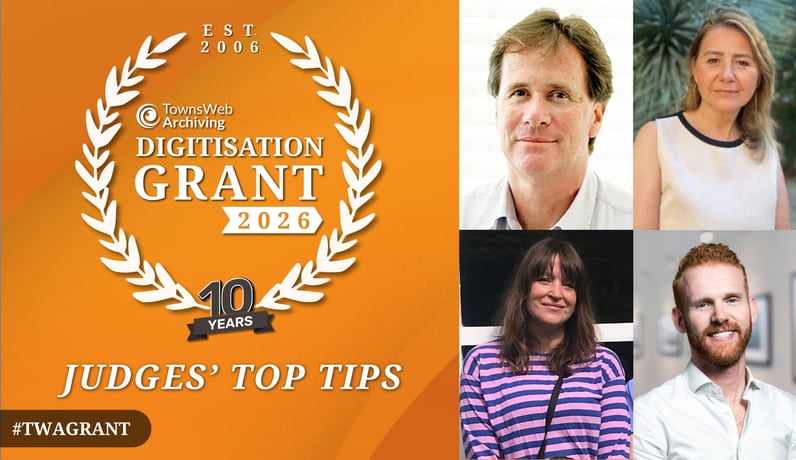
Now that applications have officially opened on 22nd April, we want to help you submit your strongest application possible. We’ve gathered some valuable tips from our panel of judges who will be reviewing all of this year’s entries.
Our three expert judges share insights on what they’re looking for in a stand-out TWA Digitisation Grant application. Every year, they’re impressed by the quality, ambition, and impact of the projects submitted — and they’re always keen to see applications that are clear, thoughtful, and purposeful.
All completed applications should be submitted by 5th June, 5pm (BST), so there’s still plenty of time to start planning your submission, and we can’t wait to see the projects you bring forward.
- Request Your Application Form Now -
Applications need to demonstrate the following criteria:

Heritage Need
Heritage value, uniqueness, and importance of the collection.

Social / Community Impact
How local people and communities will benefit from the collection.

Research Value
Whether academic, social historians, genealogists, or other researchers.

Improved Accessibility
Accessibility plans for your collection, such as platforms, preservation, and websites.
Meet the Judges for 2026:

Casper's Top Tips:
-
Like previous years, TWA is offering match funding to all applicants on a first come, first served basis, and I’m confident it will result in even stronger applications. It does mean our job as judges will be even tougher, as we look for those truly standout projects. So, my first tip is to read all the judges’ advice and carefully review the grant entry criteria. Make it easy for us to recognise your project - essentially, make sure every box is ticked!
-
Speaking of ticking boxes, it’s crucial that your motivations for digitisation are clearly thought through and well articulated. Whether your focus is preservation, access, engagement, or more behind-the-scenes goals like admin support, workplace efficiency, or improved collaboration - it all matters and should be clearly explained.
-
Lastly, once your material is digitised, I’d love to know how you plan to use it. There’s real potential to breathe new life into digital collections and present them in imaginative ways. You don’t need to have everything mapped out or a platform in place, but giving this some careful thought will go a long way.
Audrey's Top Tips:
-
I’m always drawn to projects that look beyond their own archive. The most interesting work connects into a bigger story - across communities, heritage, and culture.
-
In my experience, every organisation holds an archive, whether they realise it or not. What matters is understanding why it’s important - whose stories it tells, and why those stories deserve to be preserved and shared.
-
Through my work across the sector, I’m particularly interested in how archives sit within the wider landscape. The strongest applications show an awareness of that bigger picture and where they fit within it.
-
Coming from a conservation background, I naturally think about longevity. Digitisation isn’t just about access now - it’s about ensuring collections survive and remain meaningful for future generations.
-
For me, the most compelling projects are the ones that balance ambition with responsibility -thinking about both immediate impact and long-term care.
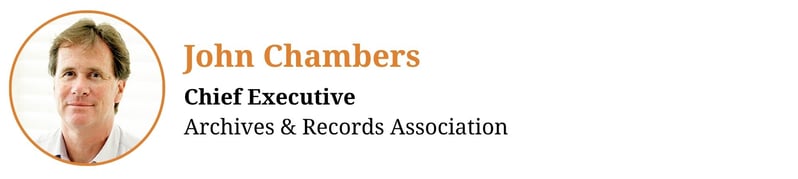
John's Top Tips:
-
I welcome applications that go the extra mile to stand out and grab my attention - consider me open and ready to be convinced by what you have to offer.
-
Don’t assume I have any prior knowledge of your archive or specialist area, and don’t let word count limit your ability to include essential, engaging detail. If your archive is ‘world class’, explain why - I’m eager to learn more.
-
A strong application is one that gives itself every opportunity to succeed - by ensuring it fully meets all the scoring criteria. Even the most incredible project can’t progress if key sections are incomplete. That’s probably my top piece of advice.

Kathryn's Top Tips:
- Highlight any unique stories within your archive, explain what makes your collection distinctive - does it capture community histories, institutional records, or personal experiences? And how would digitisation bring these stories to life.
- Consider how your material might reveal overlooked histories, challenge familiar narratives, or bring hidden stories into focus for modern audiences.
- Demonstrate the value of digital engagement and how digitisation will make your archive more engaging and accessible in a digital world.
- Consider how digitising your archive would expand access beyond your current audiences and create more opportunities to share stories more widely.
Don't Miss Out
Request your application form right now, by following this link.
For more details, watch the official 2026 announcement video, with our CEO, Paul Sugden, below:
Don’t hesitate to contact us with any digitisation grant queries and questions you may have.
Remember, applications opened on 22nd April, and all completed applications should be submitted by 5th June, 5pm (BST).
The winners will be announced on 6th August 2026 at the ARA Annual Conference!
Good luck, from all of us at TownsWeb Archiving!
 CALL US
 REQUEST A FREE
 USE OUR ONLINE